
Why Calm Vocal Communication Is Often Mistaken for Passivity and Disinterest
The gap between who you are and how you're perceived may lie in your vocal communication.
This week I worked with someone who had been receiving feedback that she seemed passive and a little disengaged at work.
When she first joined the organisation, she struggled to build relationships with her colleagues. Senior leaders had even expressed concern because she didn’t appear particularly engaged or enthusiastic.
The problem was… she wasn’t passive.
She cared deeply about her work, wanted to contribute, and genuinely wanted to connect with the people around her. Yet there was a disconnect between who she was and how others experienced her.
It wasn’t her attitude that was creating the impression.
It was her vocal communication.
Why Calm Vocal Communication Can Be Misinterpreted
As we explored her vocal profile, the reason quickly became clear.
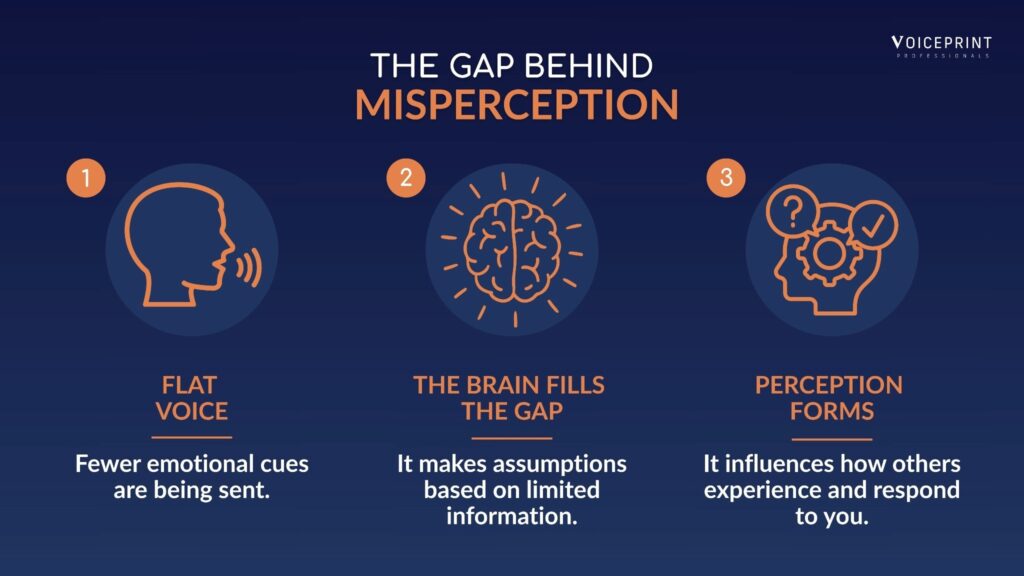
Her voice used very little pitch variation.
Pitch contours are one of the primary ways we communicate emotion, enthusiasm and engagement. Without realising it, this one vocal habit was making her sound far flatter than she actually felt.
When our pitch remains relatively flat, listeners receive fewer vocal cues that signal interest, energy and emotional involvement. As a result, the brain often fills in the gaps, interpreting a calm, steady voice as a lack of enthusiasm or engagement.
Calm vocal communication isn’t the problem. It’s when calmness is accompanied by minimal vocal variation that it can be mistaken for passivity or disinterest.
She wasn’t trying to sound detached. She simply had a vocal pattern that unintentionally reduced the emotional expression in her speech.
It’s a reminder that people don’t just respond to our intentions.
They respond to what they hear.
Our brains are constantly interpreting vocal cues, often before we’ve fully processed the words themselves. We instinctively make assumptions about confidence, warmth, credibility, enthusiasm and engagement based on how someone sounds.
In this case, her vocal communication wasn’t reflecting the person she truly was.
The Hidden Impact of First Impressions
Many people assume that if their intentions are genuine, others will naturally recognise them.
Unfortunately, communication doesn’t always work that way.
Your voice is one of the strongest contributors to first impressions, particularly in professional environments where people may not know you well. Whether you’re introducing yourself to a new team, presenting in a meeting or speaking with clients, your vocal delivery shapes how your message is received.
A calm vocal style can be incredibly valuable. It can communicate composure, thoughtfulness and emotional control.
However, when calmness is combined with very little vocal variation, listeners may unconsciously interpret it differently.
Instead of hearing calm confidence, they may hear passivity.
Instead of hearing thoughtful consideration, they may hear disinterest.
The intention hasn’t changed.
The perception has.
Your Voice Should Reflect Your Intentions
By the end of our session, my client understood why people had formed those perceptions.
More importantly, she realised she didn’t need to become louder, more extroverted or someone she wasn’t.
She simply needed more flexibility in her vocal communication.
Through practical exercises, she learned how to introduce greater pitch variation and vocal expression while remaining completely authentic. The goal wasn’t to perform or exaggerate emotion. It was to allow her voice to communicate the enthusiasm and engagement she already felt.
That small adjustment changed far more than the sound of her voice.
It changed how people experienced her.
Bridging the Gap Between Who You Are and How You're Perceived
This story captures something I see regularly in my work.
Many people aren’t being held back by a lack of knowledge, experience or capability.
They’re being misunderstood because their voice isn’t communicating what they genuinely intend.
One vocal habit had quietly been shaping this client’s professional relationships, influencing first impressions and affecting how others interpreted her engagement.
Once she understood what was happening, she was able to make subtle changes that better aligned her voice with her intentions.
That’s what effective vocal communication is really about.
Not creating a new personality.
Not putting on a more confident voice.
Not pretending to be someone you’re not.
It’s about removing the gap between who you are and how you’re perceived.
When your voice accurately represents your ideas, intentions and expertise, people are far more likely to hear the message you intended to send.
Sometimes the goal isn’t to change your communication.
It’s to ensure your voice represents you as accurately as your ideas, intentions and expertise deserve.
Calm vocal communication isn’t something to avoid. In many situations, it’s a strength. The key is ensuring that your calmness is balanced with enough vocal expression to communicate the engagement, warmth and enthusiasm you genuinely feel. When your voice accurately reflects your intentions, people are far less likely to mistake calmness for passivity.
Wondering how your voice is really being perceived?
If you’d like to understand whether your voice is communicating confidence or unintentionally being mistaken for passivity, explore our Corporate Training Programs, or join one of our Free Webinars to discover practical, science-based strategies for improving vocal influence and professional communication.